Your genes influence far more than your eye colour or hair type—they help decide how well you absorb, transport, and activate nutrients. This field, called nutrigenomics, looks at how your unique DNA affects the way your body uses vitamins, minerals, and phytonutrients.
Some people naturally convert vitamin B₁₂ into its active form easily; others have gene variants that make the process sluggish, leaving them tired, foggy, or anemic even with a “healthy” diet. These genetic differences become more important as we age—enzyme efficiency often declines, meaning nutrients that once met your needs may no longer reach therapeutic levels.
Why Supplements Can Help
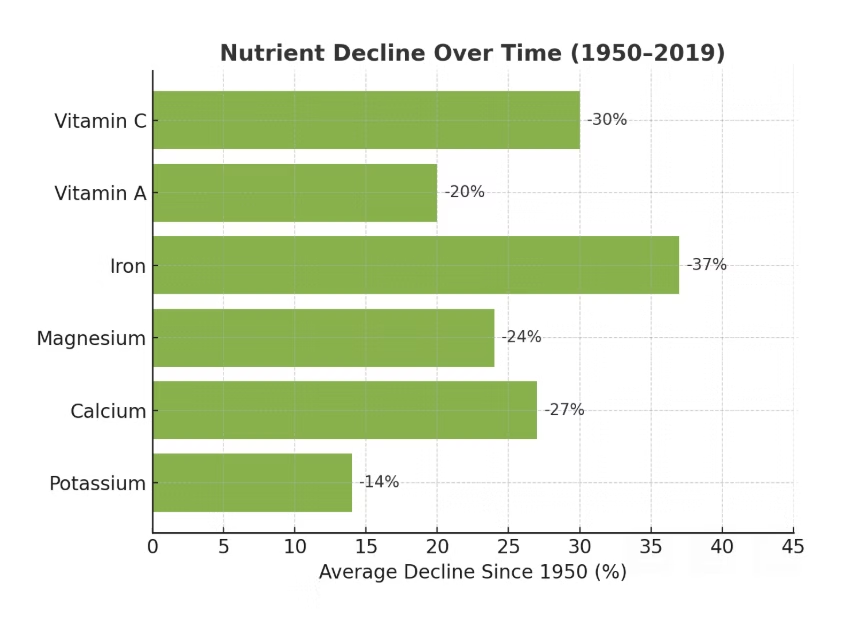
Add to that the fact that today’s food supply isn’t as nutrient-rich as it once was. Studies comparing produce from the 1950s to now show significant drops in magnesium, calcium, iron, and vitamins, largely due to soil depletion, hybrid crop varieties bred for yield over nutrition, and long storage times before foods reach your plate.
Even with the most intentional diet, gaps can form. That’s where supplementation can help bring you into a therapeutic range—the level at which nutrients actually have a functional effect on your cells, hormones, and metabolism.
But supplementation isn’t about taking “more.” The right dose, form, and timing matter. Too much of certain nutrients can be as problematic as too little.

The Reality of Recalls
Not all supplements are created equal—and recent recalls prove it:
• Canada, 2024: Health Canada recalled B50, B100 complexes and multivitamins from brands like Kirkland Signature, Webber Naturals, Natural Factors, and others due to metal fibres that could damage the digestive tract.
• International, 2025: MTN OPS Multi-V Men’s Daily Multivitamin (undeclared soy) and Vita-Warehouse Vitamin B₁₂ gummies (undeclared peanut allergen) posed serious allergy risks, reaching customers in Canada via online and cross-border sales.
These cases highlight why source matters as much as supplement.
Choose With Care
Before starting or changing supplements:
• Test first – We can check nutrient levels, run functional labs, and even screen genetics to guide a personalized plan.
• Select health-grade products – Look for brands that undergo third-party testing for purity, potency, and label accuracy.
• Use trusted resources – Websites like ConsumerLab.com independently review products, but you can also ask us directly for the ones we carry and trust in-clinic.
Practitioner Product Pick:
Genetic Testing:
At Sublime Life, we can measure your nutrient status and run advanced genetic testing to map your methylation pathways—one of the key systems controlling how your body activates and uses B-vitamins, detoxifies, and regulates inflammation. From there, we match you with practitioner-grade formulas that deliver therapeutic doses with optimal bioavailability, all third-party tested for purity.